

Facilities managers spent the last few years planning around empty desks. Now a lot of them are planning around full ones again, and the shift has been faster than most office budgets accounted for.
According to JLL’s Q2 2025 Office Market Dynamics report, 54% of Fortune 100 employees are now subject to five-day office requirements, up from just 11% a year prior. That’s not a gradual creep. That’s a wholesale reversal of how corporate America expected office space, and the equipment inside it, to be used going forward.
Small and mid-sized businesses feel this pressure differently than Fortune 100 companies do, but they feel it. Vermont offices that spent 2022 through 2024 running lean, half-staffed floors are now dealing with a return of bodies to desks that haven’t had a working phone plugged in for years — and in a lot of those offices, that phone was an NEC system installed a decade ago and never fully retired.
The RTO Wave Nobody Priced Into Facilities Budgets
The JLL numbers describe large employers, but the pattern trickles down. Regional offices, satellite branches, and vendor teams tied to bigger companies with return-to-office mandates are seeing the same shift on a smaller scale.
The same report notes that 37% of companies are actively enforcing attendance, up from 17% in 2024. Enforcement is the detail that matters here. A policy on paper doesn’t change much. A policy that’s actually tracked means people are back at their desks on a predictable schedule, using desk phones and shared lines that had been quietly abandoned.
Most offices didn’t budget for this. Facilities and IT teams built remote-era plans around fewer active extensions, not more. Reversing that assumption mid-year is a scramble, not a project with a comfortable lead time.
What Happens When Forty Empty Desks Need Working Phones Again
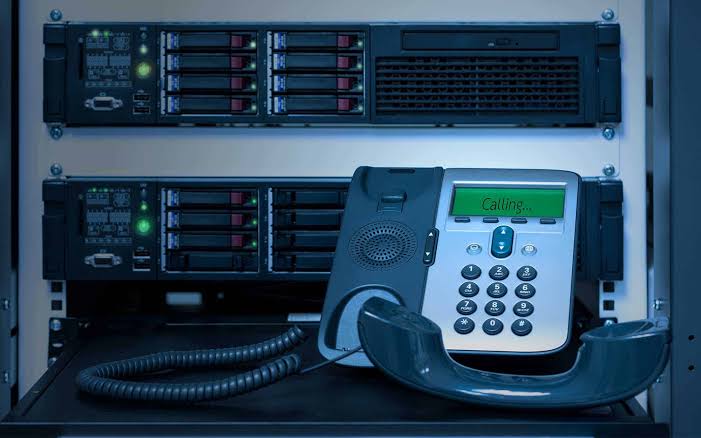
During the remote years, a lot of businesses let their phone systems atrophy quietly. Softphones and mobile apps covered whoever was working from home. Physical desk stations sat unused, some disconnected, some running outdated firmware nobody had touched — a common story for the pbx phones that make up a lot of Vermont’s small-office backbone.
Reactivating a floor of desks means more than plugging handsets back in. It means figuring out which extensions still map to the right person, whether the system can handle the mix of people back full-time and people still working two or three days remote, and whether call routing still makes sense for a team that’s reorganized twice since anyone last touched the phone system.
Hybrid schedules complicate this further. An office isn’t simply “full” or “empty” anymore. It’s full on Tuesdays and Wednesdays and half-empty the rest of the week, which means the phone system has to handle both states gracefully without someone manually reconfiguring extensions every few days.
Why On-Premise Systems Are Getting a Second Look
This is where a lot of small offices are reconsidering equipment they might have written off a few years ago. Cloud-hosted phone platforms made sense when headcount was shrinking and nobody wanted to invest in hardware for desks that might stay empty. Per-seat cloud pricing scales down easily. It also scales back up in cost just as easily when forty people return to the floor at once.
An on-premise system, the kind Vermont offices have historically run through NEC’s SL2100 and SV9100 lines, handles that swing differently. Adding stations back doesn’t mean renegotiating a subscription tier. Extensions, voicemail, and call routing live on hardware the business already owns, and mobility features let employees who split time between home and office carry their extension with them without the system treating that as an edge case.
None of this makes on-premise the automatic right call for every office. Distributed teams with no central location still lean toward hosted platforms, and that’s reasonable. But for offices watching their own floors fill back up on a fixed schedule, the math on hardware they already own, sized for headcount they can actually predict, is starting to look different than it did in 2023.
The broader lesson from the RTO data isn’t really about phone systems specifically. It’s that a lot of infrastructure decisions made during the low point of office occupancy assumed that low point was permanent. It wasn’t, and offices reopening desks on NEC systems that were never properly decommissioned are now paying the cost of unwinding assumptions that didn’t hold.